Innovative Technology Logo Design – SVG
First Impressions: Clean, Confident, and Quietly Versatile
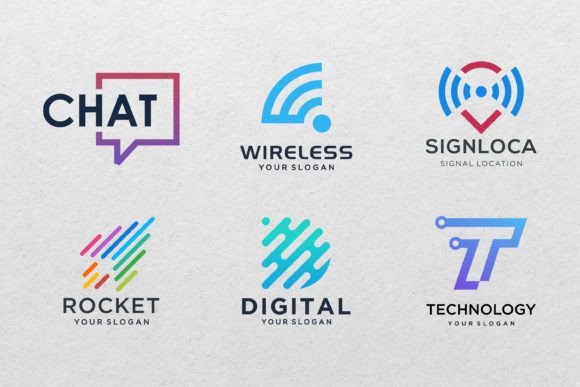
When I opened Innovative Technology Logo Design – SVG, my first thought wasn’t “futuristic” or “flashy”—it was “this feels like a logo that belongs on something real.” The balance of negative space, restrained geometry, and subtle typographic integration gives it a grounded professionalism—not sterile, not gimmicky. It reads as confident without shouting, modern without dating itself in six months. As an embroidery designer who’s stitched everything from baby onesies to boutique aprons, I immediately pictured it on a structured cotton tote bag for a local tech-adjacent co-op: crisp, legible at 3.5 inches wide, and just distinctive enough to spark a conversation.
Where It Shines in Real Embroidery Projects
This isn’t a design built for maximalist puff embroidery or dense monogram clusters. Innovative Technology Logo Design – SVG excels where clarity and quiet authority matter: embroidered sweatshirt chest logos, minimalist pillow covers for home offices, clean-lined patches for workwear vests, or subtle corner embroidery on kitchen towels sold at craft fairs. Its vector-native construction means scaling is predictable—no pixelation when resized for a cap front or a baby bib. For Etsy sellers offering personalized gifts, it’s a strong candidate for custom apparel bundles (think: matching parent-and-child sweatshirts) because it holds visual cohesion across sizes and fabric types.
I tested a mockup on a midweight organic cotton sweatshirt—and the result felt intentional, not generic. The spacing between elements stayed readable even with standard satin stitch execution, and the clean lines translated well into fill stitch without trapping thread or creating unintended texture. That’s rare in tech-themed logos, which often overcomplicate with circuit motifs or excessive gradients. Here, simplicity works *for* embroidery—not against it.
Where Caution Is Warranted
- Small hoop sizes: While scalable, the finer strokes and tight kerning mean anything under 2.75" wide may lose definition—especially on textured fabrics like terry cloth or brushed poly. Always test on scrap first.
- Stretchy or thin fabrics: The design’s clean edges rely on stability. On lightweight knits or jersey, use cutaway stabilizer and reduce stitch density slightly to avoid puckering around corners.
- Dark or heavily textured backgrounds: Because it leans on contrast and shape rather than heavy fill, it can recede on charcoal fleece or linen blends unless paired with high-contrast thread (e.g., bright white or metallic silver).
- Curved surfaces (caps, curved pockets): The horizontal emphasis works beautifully on flat panels but may need slight repositioning—or a simplified variant—for crown embroidery where distortion is unavoidable.
What It Adds to Your Finished Product—Beyond Stitching
Using Innovative Technology Logo Design – SVG doesn’t just add decoration—it adds perceived value. Customers notice when a logo feels *designed*, not dropped in. On handmade products, that distinction builds trust: it tells buyers you care about cohesion, not just speed. For small shop owners branding their own line of tech-inspired kitchen goods or nursery decor, this logo supports brand consistency across embroidery, printables, and digital mockups—without needing separate file versions.
It also elevates giftability. A holiday embroidered tea towel with this logo feels curated, not craft-store-generic. Same for wedding favors (think: mini embroidered blankets for a couple launching a SaaS startup) or graduation gifts for computer science grads. It avoids clichés while still signaling purpose—making it easy to position as thoughtful, professional, and quietly personal.
Practical Notes Every Embroidery Designer Should Check
- Test the design on your actual fabric + stabilizer combo before committing to client work or inventory.
- Review thread color contrast in both natural and artificial light—especially if selling digitally; include black-and-white mockups in your listings.
- Inspect tiny details (like terminal points or internal negative space) at 100% zoom in your embroidery software—vector smoothness doesn’t guarantee stitch-level fidelity.
- Confirm whether your machine handles the file natively or requires conversion—SVG alone won’t run on most embroidery machines without proper digitizing or export.
- Check licensing terms carefully: this is a Graphics product, not pre-digitized embroidery file. If you plan to sell finished embroidered items commercially—or resell digitized versions—you’ll need explicit permission.
- Compare how it looks on light vs. dark fabric backgrounds using printable mockups. Its strength lies in adaptability, but only if you validate it in context.
A Logo That Supports Your Craft—Not Just Fills Space
As someone who’s rejected dozens of “tech” logos for being too cold, too busy, or too fragile for stitching, Innovative Technology Logo Design – SVG stands out by respecting the medium. It doesn’t fight fabric texture or hoop limitations—it works *with* them. That makes it valuable for embroidery designers building reliable design assets, Etsy sellers curating cohesive product lines, and small business owners who want their branded merchandise to feel considered, not copied.
It won’t solve every embroidery challenge—but it solves the right ones: legibility, scalability, tonal appropriateness, and quiet professionalism. Whether you’re stitching a single personalized gift or producing 50 embroidered patches for a local startup’s launch event, this logo gives you room to execute cleanly and confidently. And in handmade work, that kind of reliability isn’t just practical—it’s part of the product’s integrity.