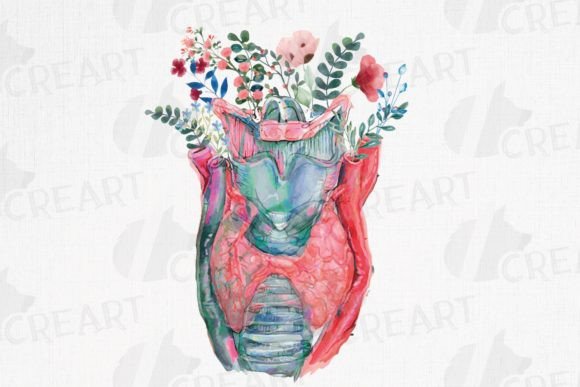
Prairie Flower Anatomical Larynx Thyroid
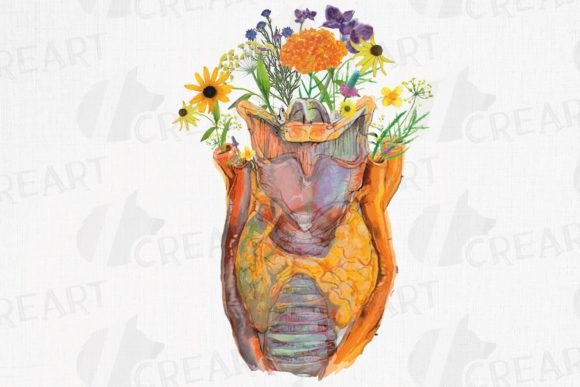
As a designer who’s stitched everything from pediatric oncology awareness tees to boutique aprons for naturopathic clinics, I opened Prairie Flower Anatomical Larynx Thyroid expecting something delicate—and found a quiet powerhouse. It’s not just anatomy dressed up in petals; it’s a thoughtful visual negotiation between scientific accuracy and botanical softness. The larynx sits centered, rendered with clean, confident linework—no cartoonish exaggeration, no clinical coldness. Around it, prairie flowers bloom in asymmetrical clusters: coneflowers, yarrow, maybe a hint of milkweed. Their stems curve gently into the thyroid’s shape, making the whole composition feel like a field sketch from a med student’s notebook—grounded, intentional, human.
This Isn’t Just Another Anatomy Print—It’s a Conversation Starter
I recently prepped a custom embroidered tote for a thyroid specialist launching her private practice. She wanted something that felt warm but authoritative—nothing too clinical, nothing too twee. Prairie Flower Anatomical Larynx Thyroid landed perfectly: professional enough for a waiting room wall, gentle enough for a patient’s first visit. When stitched on natural canvas with matte cotton thread, the floral elements softened the anatomical lines without erasing them. Customers noticed it immediately—not as “a weird throat drawing,” but as “that beautiful flower-and-organ thing.” That shift matters. It builds trust before the first appointment.
Where This Design Shines (and Where It Needs Care)
Prairie Flower Anatomical Larynx Thyroid thrives on stable, medium-weight fabrics: denim aprons, organic cotton sweatshirts, linen pillow covers, and tea towels. Its balanced negative space lets stitch density breathe—no dense fill-stitch swamp around the thyroid lobes or petal tips. On a 5×7 hoop, it fits cleanly with room to spare. As a machine embroidery design, it avoids tiny, fragile details: no micro-lettering, no hair-thin stem outlines, no overlapping satin-stitch layers that’ll snag during trimming. That makes it unusually forgiving for small shop owners stitching late-night Etsy orders or craft fair inventory.
That said—don’t rush it onto baby onesies or ribbed knit caps. The design’s moderate scale (roughly 3.5–4 inches wide) relies on clarity, not compression. On stretchy fabric, the floral curves can warp slightly unless you use cutaway + tear-away stabilizer combo. And while it reads beautifully on light ecru or oatmeal, avoid deep charcoal or navy unless you test thread contrast first: some floral outlines vanish if your thread blends too closely with the base fabric. I ran a quick black-and-white mockup before committing—and caught that exact issue on a dark indigo towel.
Real-World Fit: From Boutique Shelf to Holiday Gift Bag
This isn’t a one-size-fits-all graphic. It’s niche—but meaningfully so. As a printable home decor item, it works on framed art prints or ceramic mugs—but its real strength is in embroidered applications where tactility adds weight. Think: an embroidered patch sewn onto a lab coat lapel, a subtle chest placement on a women’s v-neck sweatshirt for endocrinology residents, or a soft-focus version stitched onto a muslin baby blanket for a pediatric endocrinologist’s newborn gift. I’ve seen similar designs sell steadily on Etsy under tags like “med student gift” and “thyroid awareness”—but Prairie Flower Anatomical Larynx Thyroid stands out because it doesn’t shout. It invites leaning in.
For craft business owners, that subtlety translates to higher perceived value. A customer paying $48 for a hand-embroidered linen pouch with this design isn’t buying decoration—they’re buying alignment: with their values, their profession, their quiet pride in a complex, often misunderstood part of the body. That resonance lifts pricing power and repeat engagement. It also photographs well in natural light—critical for Instagram-driven shops or printable mockups used in digital product listings.
Designer Notes You’ll Actually Use
- Always test on scrap fabric first—especially if using textured weaves like bouclé or terry cloth. The floral stems hold up better than expected, but texture can blur fine edges.
- Check stitch density in the thyroid capsule area. Some versions of this motif overfill that region, causing puckering. If yours does, reduce density by 10–15% in your embroidery software.
- Confirm licensing before selling finished products. Since this lives in the Print Templates / Graphics category, verify whether commercial use is included—or if you need separate permission to embroider and resell items bearing the design.
- Use proper stabilizer for every run. Even on stable cotton, lightweight cutaway prevents shifting in the laryngeal cartilage lines.
- Review small details at actual stitch size. Zoom in on your embroidery file viewer: are petal tips distinct? Is the cricoid ring legible? If not, adjust underlay or slow stitch speed.
- Test both light and dark backgrounds. What reads as elegant on ivory may feel muddy on heather gray—especially with tonal thread palettes.
A Design That Earns Its Place
Let’s be honest: most anatomy-themed embroidery files veer toward either sterile diagram or cutesy caricature. Prairie Flower Anatomical Larynx Thyroid avoids both traps. It carries weight without heaviness, knowledge without distance, beauty without pretense. For the Etsy seller building a line of med-school graduation gifts, the small shop owner curating wellness-themed merchandise, or the embroiderer stitching personalized holiday pieces for healthcare workers—it’s not just another digital embroidery file. It’s a quiet act of recognition. And in handmade work, that’s where real connection begins.